
Diabetes
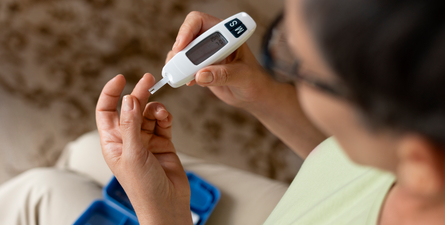
Diabetes is a chronic metabolic disorder characterized by elevated blood glucose levels. It occurs when the body either does not produce enough insulin, a hormone secreted by the pancreas, or cannot effectively use the insulin it produces. Persistently high blood sugar levels can lead to a range of complications affecting multiple organ systems. Diabetes is strongly influenced by behavioural and lifestyle risk factors such as poor diet, physical inactivity, obesity, smoking, and alcohol consumption.
As of 2024, an estimated 89.8 million people, representing 10.5% of India’s population, were living with diabetes, while a further 136 million people had prediabetes.[1] According to the National Family Health Survey (NFHS-6) 2023-2024, the prevalence of high blood sugar levels increased from 7.3% in 2021 to 8.8% in 2024 among men and from 6.1% to 7.5% among women.[2] During the same period, the prevalence of very high blood sugar levels rose from 7.1% to 10.9% among men and from 6.3% to 9.1% among women.[2] These trends indicate that diabetes is one of the fastest-growing non-communicable diseases in India and needs robust burden estimation to direct prevention policies.
How we address this challenge
Our aim is to develop a data-driven framework providing a quantitative tool for diabetes control policies.
- Develop a next generation disease model relevant to the Indian scenario.
- Estimate disease burden at national and subnational levels.
- Identify the most influential pathways driving disease progression through sensitivity analysis.
- Forecast future diabetes prevalence under different intervention scenarios.
Ongoing work
We have developed an age-stratified mathematical model tracking the progression of individuals through multiple health states. Using this, we have estimated age-dependent transition rates between the different health states using nationally representative epidemiological data from the National Noncommunicable Disease Monitoring Survey (NNMS) and the ICMR-INDIAB study, enabling a data-driven representation of the progression of diabetes in the Indian population. We also identified that obesity-related transitions like progression from healthy state to obesity are among the most influential determinants of the long-term diabetes burden, highlighting obesity control as a priority area for public health interventions. We also developed a long-term forecasting framework to project diabetes prevalence up to 2105 under multiple public health scenarios, which demonstrate the long-term benefits of preventive interventions to support policy planning and resource allocation for diabetes control.
References
- Rana, N. S., Vishvakarma, N. K., Sonkar, S. C., & Beg, M. M. A. (2026). Diabetes: A comprehensive review of the Indian landscape in contrast with global trends. World Journal of Diabetes, 17(2), 110701.
https://doi.org/10.4239/wjd.v17.i2.110701 - International Institute for Population Sciences. (2024). National Family Health Survey (NFHS-6), 2023-2024: Fact sheets.
https://www.nfhsiips.in/nfhsuser/assets/National%20Family%20Health%20Survey%20(NFHS-6)%202023-2024%20Fact%20Sheets.pdf
Team
Faculty Investigators- PI: Prof. Mithun Mitra
- Prof. Santu Ghosh
- Prof. Bhaswati Ganguli
Researchers
- Dr. Amol Pawar
- Bhavana M. R.
- Prodipta Mondal
- Dr. Rajesh Majumder