
Human papillomavirus
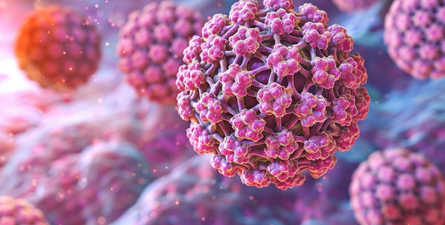
Human papillomavirus (HPV) is a group of 200 known viruses, causing sexually transmitted infections of genitalia, skin, throat, and mouth. Most of these infections are benign and are routinely cleared by the immune system. However, 12 of the viral types are high risk for cancer, with HPV types 16 and 18 accounting for nearly 99% cervical cancer cases.[1,2] Cervical cancer is preventable with vaccination against HPV, and routine screening for cancerous cells in the cervix can result in early diagnosis and cancer prevention.
India contributed to 24% of global HPV related cancer incidence in 2020.[3] 78,499 new cervical cancer cases and >42,000 deaths were estimated in India for 2024,[4] underlining the urgent need for optimizing screening and vaccination strategies.
How we address this challenge
We use mathematical modelling to predict HPV incidence and analyze vaccination intervention.
- Assess the impact of HPV vaccination and cancer screening on cervical cancer burden.
- Analyze the effect of HPV testing and intervention on Indian cohorts at the national and subnational levels.
- Evaluate the efficacy of gender-specific and gender-neutral vaccination.
- Develop a computational approach for imputation of missing data.
Ongoing work
We have used an agent-based model to study HPV transmission and cervical cancer prevalence in collaboration with researchers at the Institute for Disease Modeling (IDM). We have also developed a compartmental model to evaluate the impact of HPV testing using national- and state-level cancer registry data. Drawing on these analyses, we have formulated recommendations on optimal vaccination schedules based on age and dosage, generating evidence to support effective cervical cancer prevention programmes. In addition, we are developing a compartmental model to assess the combined impact of HPV vaccination and cervical cancer screening interventions.
Publications
- Stuart RM, Cohen JA, Kerr CC, Mathur P, National Disease Modelling Consortium of India, Abeysuriya RG, Zimmermann M, Rao DW, Boudreau MC, Lee S, Yang L, Klein DJ. HPVsim: An agent-based model of HPV transmission and cervical disease. PLoS Comput Biol. Published online July 5, 2024. doi:10.1371/journal.pcbi.1012181.
References
- Ramamoorthy, T., Sathishkumar, K., Das, P., Sudarshan, K. L., & Mathur, P. (2022). Epidemiology of human papillomavirus related cancers in India: Findings from the National Cancer Registry Programme. ecancermedicalscience, 16, 1444.
https://doi.org/10.3332/ecancer.2022.1444 - Parvez, R., Vijayachari, P., Thiruvengadam, K., et al. (2024). A population based study on human papillomavirus infection and associated risk factors among women of the remote South Andaman Island, India. BMC Women's Health, 24, 139. https://doi.org/10.1186/s12905-024-02967-7
- Sung, H., Ferlay, J., Siegel, R. L., Laversanne, M., Soerjomataram, I., Jemal, A., & Bray, F. (2021). Global cancer statistics 2020: GLOBOCAN estimates of incidence and mortality worldwide for 36 cancers in 185 countries. CA: A Cancer Journal for Clinicians, 71(3), 209–249. https://doi.org/10.3322/caac.21660
- Ministry of Health and Family Welfare. (2026, February 28). Meghalaya launches
National Human Papillomavirus (HPV) vaccination campaign at Ganesh Das Hospital Shillong. Press Information Bureau.
https://www.pib.gov.in/PressReleasePage.aspx?PRID=2233972®=3&lang=2
Team
Faculty Investigators- Prof. Ganesh Ramakrishnan
- Prof. Ajit Rajwade
- Prof. Nirav Bhatt
Researchers
- Dr. Arjun Kumar, IITM
- Mr. Arvinth S., IITM
- Dr. Bikash Modak
- Dr. Prerna Bhalla, IITM
- Dr. Rashmi Tiwari