
Malaria
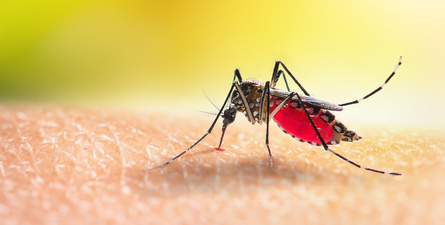
Malaria is a potentially fatal mosquito-borne disease caused by the protozoan parasites of the genus Plasmodium. The disease is transmitted through the bite of infected female Anopheles mosquitoes and can range from mild fever and chills to severe complications, including respiratory distress, convulsions, coma, and death.
India has made remarkable progress in malaria control, with reported cases declining by 77% from 1.1 million in 2014 to 0.25 million in 2024.[1] Malaria-related deaths have similarly fallen by 84.7%, from 562 to 86 during the same period.[1] Despite these gains, malaria transmission persists in several regions of the country, and India contributes 0.7% to the global malaria burden.[2]
Malaria transmission in India is highly heterogeneous, with the burden concentrated in specific geographical pockets. These residual high-burden areas pose challenges for achieving the national goal of malaria elimination by 2030. Understanding temporal trends, seasonal patterns, and the role of climatic and socio-economic factors in driving malaria transmission is essential for preventing resurgence and guiding targeted interventions.
How we address this challenge
We use mathematical modelling and machine learning approaches for estimating burden and progression.
- Estimate malaria burden at district and state levels.
- Characterize geographic heterogeneity and temporal variation in transmission at sub-national levels.
- Understand how climatic and environmental factors affect short-term dynamics.
- Predict malaria outbreaks and forecast their impact.
Ongoing work
We have identified malaria hotspots across India and developed an interactive national malaria dashboard to visualize disease burden and transmission patterns. These analyses help identify high-risk populations and regions, enabling more targeted and effective interventions. Using environmental and socioeconomic data, we have examined factors associated with malaria risk, including household sanitation, living standards, lifestyle characteristics, meteorological conditions, and air pollution. The resulting insights can support early warning systems, guide resource allocation, and strengthen malaria control efforts.
Publications
- Phuleria H, Sam A, Keshri N, Bhowmick I, Anvikar A. Mapping malaria risk in India between 2019 and 2023: a tool for the public to track malaria. Sci Rep 15, 42956 (2025). https://doi.org/10.1038/s41598-025-25671-4
- Sam AK, Khatoon A, Phuleria HC. Determinants of malaria transmission in Indian districts in 2018: insights from ensemble models. Malar J. 2025;24(1):336. Published 2025 Oct 14. doi:10.1186/s12936-025-05546-9
- Chougale, P.D., Somaraj, A.B., Ananthakumar, U. (2025). Predicting Malaria Cases in Mumbai: Insights from Statistical and Machine Learning Models. In: Palaiahnakote, S., Schuckers, S., Ogier, JM., Bhattacharya, P., Pal, U., Bhattacharya, S. (eds) Pattern Recognition. ICPR 2024 International Workshops and Challenges. ICPR 2024. Lecture Notes in Computer Science, vol 15615. Springer, Cham. https://doi.org/10.1007/978-3-031-87660-8_2
References
- National Center for Vector Borne Diseases Control. (n.d.). Countrywide
epidemiological data.
https://ncvbdc.mohfw.gov.in/index4.php?lang=1&level=0&linkid=420&lid=3699 - World Health Organization. (2025). World malaria report 2025: Addressing the
threat of antimalarial drug resistance.
https://www.who.int/publications/i/item/9789240111127
Team
Faculty Investigators- PI: Prof. Harish Phuleria
- Co-PI: Prof. Usha Ananthakumar
Researchers
- Adithya B. Somaraj
- Kaizeen Balsara
- Karthika M. Satyanarayanan