
Measles
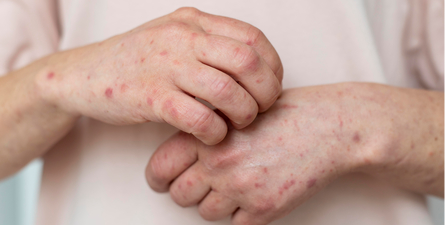
Measles is one of the most contagious diseases and remains a major threat to public health. India has made considerable progress in its measles and rubella (MR) immunization programme resulting in about 98% vaccination coverage for the first dose and about 95% for the second dose in 2025.[1] Consequently, India has recorded a 40.3% decline in measles in 2025 compared to 2015.[2]
Despite these efforts, vaccination coverage across the country is uneven, leaving many children unvaccinated and prone to measles outbreaks.
How we address this challenge
We use statistical and mathematical models to analyze measles dynamics and inform vaccination strategies.
- Subnational analysis of measles in certain high burden states
- Assessment of surveillance system performance and underreporting
- Exploring outbreak prediction with machine learning algorithms
- Investigate the impact of novel interventions to measles burden
- A new risk scoring method for district level analysis
Ongoing work
To capture the age-specific nature of measles transmission, we developed an age-stratified compartmental measles model and analyzed age-specific incidence at the national and subnational level. We also analyzed dose-wise vaccination coverage among children aged 24-35 months, to estimate the number of children who were unvaccinated, partially or fully vaccinated. We examined socio-demographic and economic determinants of vaccination uptake, including maternal education, household wealth, caste, religion, place of residence, and regional disparities. We also estimated the number of cases, deaths and DALYs that have been averted for every 100000 vaccine doses. We are also working on immune profiling of children with measles.
We linked NFHS-5 data with Mission Antyodaya indicators to assess the role of community-level health and Integrated Child Development Services (ICDS) infrastructure in improving vaccination coverage and reducing the burden of vaccine preventable diseases. Our research has resulted in recommendations on vaccination strategy to the immunization division of the Government of India.
Publications
- Ghosh S, Ghosh I, Mukhopadhyay S. An age-stratified mathematical model to inform optimal measles vaccination strategies. 2025 - In revision
- Ghosh S, Banerjee M, Dhar SS, Mukhopadhyay S. Estimation of time-varying recovery and death rates from epidemiological data: A new approach. Math Biosci. Published online June 9, 2025.
- Ghosh S, Kappara D, Majumder N, Nath-Sain S, and Mukhopadhyay S. A systematic review and modelling insights of factors impacting measles vaccine effectiveness. Discover Viruses. 2025; 2:23. https://doi.org/10.1007/s44370-025-00027-8.
References
- World Health Organization. (n.d.). Measles vaccination coverage. WHO
Immunization Data Portal. Retrieved July 24, 2026, from
https://immunizationdata.who.int/global/wiise-detail-page/measles-vaccination-coverage - World Health Organization. (n.d.). Measles reported cases and incidence. WHO
Immunization Data Portal. Retrieved July 24, 2026, from
https://immunizationdata.who.int/global/wiise-detail-page/measles-reported-cases-and-incidence
Team
Faculty Investigators- PI: Prof. Siuli Mukhopadhyay
- Co-PI: Prof. Rama Pal
- Prof. Indrajit Ghosh
Researchers
- Barnita Das
- Dr. Biplab Maity
- Brian Wanzama
- Dr. Esha Kashyap
- Mariya Francis
- Dr. Nabanita Majumder
- Pallab Sinha
- Dr. Rajashekar Mopuri
- Shoummo Sen Gupta
- Dr. Sourav Roy
- Dr. Tamil Selvan