
Visceral leishmaniasis
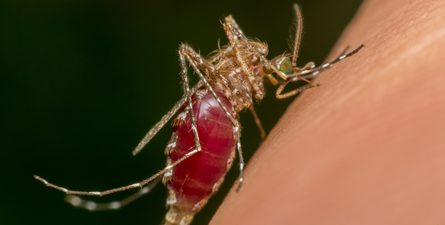
Visceral leishmaniasis (VL), also known as kala-azar, is a potentially fatal parasitic disease caused by Leishmania donovani in India and transmitted through the bite of infected sand flies. Without treatment, VL can be fatal within two years. A proportion of successfully treated patients subsequently develop post-kala-azar dermal leishmaniasis (PKDL), a skin condition in which parasites persist within lesions and can continue to infect sand flies, thereby sustaining transmission. VL-HIV coinfection presents an additional challenge, as each infection worsens the progression of the other.[1]
India has made substantial progress in controlling leishmaniasis, with VL cases declining from 1,276 in 2021 to 429 in 2025 and deaths falling from 8 to 3 during the same period.[2] PKDL cases have decreased by 16% since 2014, while VL-HIV coinfection cases have fallen by 94% since 2015.[2] Despite these gains, persistent PKDL cases which cause resurgent transmission threaten elimination efforts. Understanding disease transmission dynamics and identifying factors that drive resurgence remain essential for achieving and sustaining the elimination of VL.
How we address this challenge
We use mathematical modelling to forecast transmission and support targeted public health interventions.
- Build prediction models and perform spatio-temporal analysis using socio-economic, demographic, and environmental predictors.
- Model the optimal PKDL levels to prevent VL resurgence within a specified time frame.
- Assess the impact of HIV co-infection on the resurgence of VL.
- Identify district-level trends and high-burden areas.
- Model the effect of physiological factors on PKDL.
- Predict VL outbreaks and forecast their potential impact.
Ongoing work
We have developed an ordinary differential equation transmission model incorporating both human and sand fly populations to better understand the dynamics of visceral leishmaniasis transmission. To identify areas at greatest risk, we performed spatial hotspot analyses of VL and PKDL, and shared the results with the Integrated Disease Surveillance Programme, which has expressed interest in incorporating these analyses into the Integrated Health Information Platform. We also developed an econometric model linking VL incidence to PKDL prevalence, socio-economic variables, and climatic indicators, providing insights into the factors that influence disease burden. In addition, we formulated and analytically investigated deterministic HIV-VL coinfection models, and performed numerical simulations to visualize the impact of HIV on VL prevalence and identify cost-effective intervention strategies.
Publications
- S Nivetha, Sunil Maity, A. Karthik, Tanu Jain, Chhavi Pant Joshi, Mini Ghosh A Deterministic Approach to the Dynamics of Visceral Leishmaniasis and HIV Co-infection with Optimal Control. 2026. Preprint
- Arumugam D, Ghosh M. Dual Nanoparticle-Driven Therapeutics for Leishmaniasis: A Mathematical Model of Targeted Macrophage and Parasite Elimination. 2026.
References
- Lindoso, J. A. L., Moreira, C. H. V., Cunha, M. A., & Queiroz, I. T. (2018). Visceral leishmaniasis and HIV coinfection: Current perspectives. HIV/AIDS - Research and Palliative Care, 10, 193-201. https://doi.org/10.2147/HIV.S143929
- National Centre for Vector Borne Diseases Control. (n.d.). Kala-azar situation in
India. Retrieved June 4, 2026, from
https://ncvbdc.mohfw.gov.in/index4.php?lang=1&level=0&linkid=467&lid=3750
Team
Faculty Investigators- PI: Prof. Souvik Banerjee
- Co-PI: Prof. Mithun Mitra
- Prof. Mini Ghosh
Researcher
- Dr. Divya Arumugam
- A Karthik
- Dr. Lekhika Malhotra
- S Nivetha
- Dr. Rashmi Tiwari
- Shoummo Sen Gupta