
Events
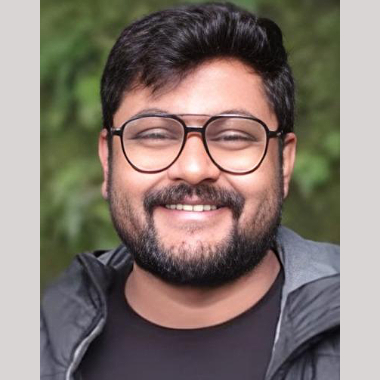
NDMC Invited Talk Series: Invited talk by Dr. Aniket Biswas, IIT Kharagpur
March 18, 2026
Dr. Aniket Biswas delivered an online talk on “Too Many Tests, Not Enough Truths” on the 18th of March 2026 as part of the NDMC Invited Talk Series.
Dr. Aniket Biswas is an Assistant Professor of Statistics at the Department of Mathematics, IIT Kharagpur. He holds a Ph.D. in Statistics from the University of Calcutta, where he also completed his undergraduate and postgraduate studies. His research focuses on the broader area of statistical inference, with a specialized interest in multiple hypotheses testing. He also works on count data modeling, reliability analysis, and interdisciplinary statistical applications.
Abstract
Large-scale data analysis problems often require testing many hypotheses simultaneously. Such situations arise in applications like identifying differentially expressed genes in cancer studies, hotspot detection in lifetime data analysis, and variable selection problems in areas such as drug resistance analysis. When many hypotheses are tested together, classical single-test procedures are no longer appropriate because the overall Type-I error can increase substantially. To address this issue, several error measures have been proposed for multiple hypothesis testing, among which the False Discovery Rate (FDR) has become one of the most widely used criteria. In this talk, we begin with motivating applications and briefly review the basic ideas of single hypothesis testing before introducing the multiple testing framework and overall error measures, with special emphasis on FDR control. We then discuss methods that improve the performance of the Benjamini-Hochberg procedure through estimation of the proportion of true null hypotheses. We also consider adaptive procedures that incorporate p-value weights to enhance detection power. Finally, we show how the classical statistical problem of variable selection can be formulated as a multiple testing problem and discuss some recent developments in this direction.